 Limited spots, unlimited potential.

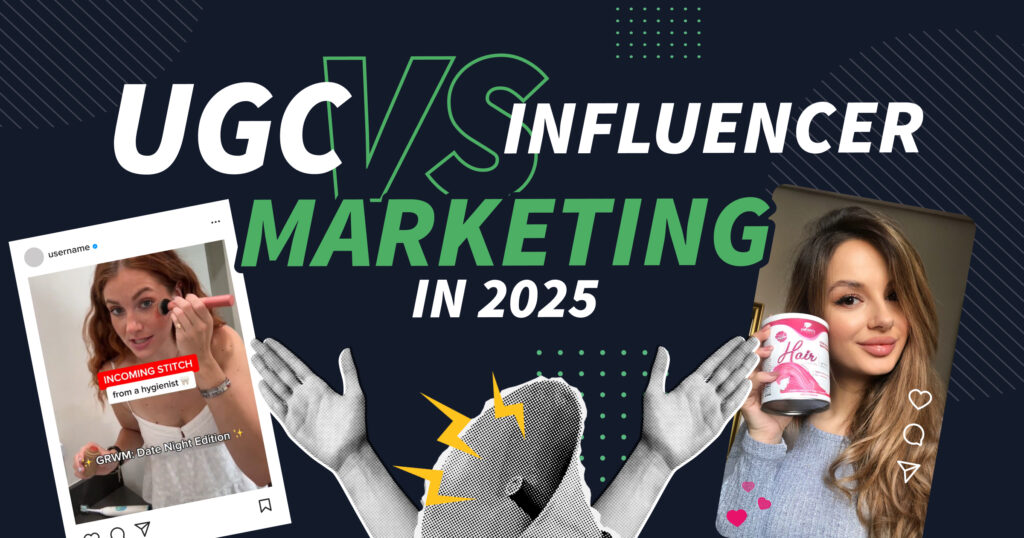
Brands are asking this a lot in 2025. Paid ads cost more. Trust is fragile, especially consumer trust.
Shoppers today are skeptical of glossy ads and polished promises. They have seen too many overhyped campaigns that did not deliver, and they have learned to question whether a message is genuine or just paid placement. That is why credibility is currency: the brands that feel real earn attention, while the ones that feel manufactured get ignored.
So the question becomes simple: do you lean into real customer content, or rent attention from creators with an audience? Both can work. Both can flop. The right choice depends on your goal, your product, and your timeline.
Let’s break it down in plain language so you can act on it today.
What is UGC Marketing?
UGC means user-generated content. It is content made by customers, fans, or everyday creators. Think selfie videos, unboxings, before–and–after clips, stitch reactions, product demos at home, and honest reviews.
Some of it appears organically. Some is created based on briefs sent to paid UGC creators who do not post to their own channels. You get the raw files. You use them in ads, on product pages, in email, and across social media.
Why brands love it
- It feels like a friend talking.
- It is fast to produce and test.
- It is cheaper than paying for a big audience.
- It can scale inside performance channels.
Who creates it
- Real customers and community members
- Paid UGC creators who film to your brief.
- Employees and founders who show the product in use
What is Influencer Marketing?
Influencer marketing uses creators who already have an audience.
You pay for access to that audience. The creator posts to their own channels. That post can be a feed post, a story set, a live stream, a YouTube review, or a TikTok series. You can also arrange usage rights so you can run their content as ads on your brand account or through the creator’s handle.
Why brands love it
- Reach and discovery
- Borrowed credibility from a trusted voice
- PR value that goes beyond direct response
- Access to specific communities
Who creates it
- Nano influencers with under 10k followers
- Micro and mid-tier creators
- Macro creators and celebrities
Key Differences Between UGC and Influencer Marketing
Cost
UGC is usually cheaper per asset. You pay per video or per batch. Influencer posts cost more because you rent reach. Add fees for usage and whitelisting.
Reach
UGC on your channels needs paid distribution to scale. Influencer content can reach its audience without media spend. For serious results, you will still boost it.
Authenticity
UGC tends to feel more like a friend’s take. Influencer content can feel too polished. Authenticity depends on the creator’s style and how tightly you script.
Content ownership
UGC deals often grant you full usage for the ads and creatives that were made for your brand. Influencer deals can vary quite a lot. Usage windows and whitelisting terms matter. Read the contract.
Audience type
UGC wins in lower funnel moments. Retargeting. Product detail pages. Email. Influencer content shines at the top of the funnel, launches, and buzz.
When to Use UGC
Use UGC when you need fresh creative for performance channels. You want fast testing. You want believable demos. You want proof on the page.
Great fits
- DTC and eCommerce brands that live and die by paid social
- Beauty, skincare, wellness, fitness, and home goods
- Any product with a clear demo or transformation
- Subscriptions where routines and habits matter
Smart plays
- Film three to five angles per brief. Hook, problem, solution, proof, CTA.
- Ask for native formats that match the platform.
- Edit for silence first. Add captions.
- Use user-generated content (UGC) snippets in emails and product detail pages (PDPs) to lift conversion.
- Refresh your approach monthly to keep your ads fresh.
Watchouts
- “Organic UGC” is not free. It needs outreach and incentives.
- Cheap content that looks fake will hurt your customers’ trust.
- Always collect releases and usage rights.
When to Use Influencer Marketing
Use influencer marketing when you need to reach new people with credibility. You want authority. You want stories that spark conversation. You want social proof at scale.
Great fits
- Product launches and big moments that need buzz
- Categories that require education or expert trust, like health-related niches, finance tools, or specialty tech
- Fashion and lifestyle where taste and style curation matter
- Local markets where a few creators drive regional demand
Smart plays
- Match the creator’s audience to your buyer, not just follower count.
- Agree on one clear message and a natural format for that creator.
- Negotiate usage and whitelisting rights up front.
- Layer tracking. Use unique codes and links to see which influencer or campaign drives real sales, not just likes. This helps you compare performance and double down on what works.
- Plan a content ladder. Feed posts, stories, short clips, then a long-form review.
Watchouts
- Big reach can drive vanity metrics without sales.
- Post timing can slip. Build a buffer into your plan.
- Usage rights can kill your budget if you don’t set them early.
Can You Combine Both?
Yes. In fact, the strongest brands in 2025 do. Here is a simple hybrid model:
1. Seed and spark
Send product to small creators and loyal customers. Invite honest takes. No pressure. Repost the best organic UGC with permission.
2. Anchor with authority
Book a few well-matched influencers for launch week. They bring reach and context. You clip their posts into short assets.
3. Scale with paid ads
Turn the UGC and influencer cuts into ad variants. Test hooks, opening frames, offers, and CTAs. Use creator whitelisting to run ads from the influencer’s handle.
4. Maintain Momentum with Consistent Content
Commission monthly UGC batches to refresh your creative library. Keep one or two influencer partners for deeper stories each quarter.
Example flows
- A skincare launch uses a dermatologist influencer for education, then runs ten UGC testimonial clips for retargeting.
- A fitness brand partners with a coach for a program overview, then fills the funnel with member progress videos and weekly UGC tips.
- A home gadget brand features a YouTube review for search intent, then turns three UGC problem solver clips into high-performing reels ads.
Comparing UGC and Influencer Marketing
| Aspect | UGC marketing | Influencer marketing |
| Primary value | Believable demos and social proof | Reach and borrowed credibility |
| Speed | Fast to brief and produce | Slower due to negotiations and schedules |
| Cost | Lower per asset | Higher per post or campaign |
| Control | High control over format and edits | Lower control once posted on creator channels |
| Ownership | Often full usage rights for ads and creatives | Usage limits are common. Negotiate up front |
| Best for | Conversion lifts and ad testing | Discovery, launches, and brand storytelling |
| Risks | Low quality looks fake and hurts trust | Mismatch hurts brand and wastes budget |
| Measurement | Easy in ads | Needs blended metrics across channels |
Which Approach Works When
1. Need more creatives for a paid social post
Go UGC first. Order a batch. Test fast.
2. Need a splashy launch
Book influencers who speak to your niche. Add usage rights so you can extend the life of the posts.
3. Need proof on PDPs and in emails
UGC wins. Short clips, quotes, and before and after shots.
4. Need to enter a new country or subculture
Influencers with local trust will open doors.
5. Need steady performance all quarter
Run a hybrid plan. Monthly UGC plus a few influencer moments.
Building Your UGC Content Strategy
Start with a clear brief that focuses on one product, one problem, and one promise.
Once that’s defined, ask creators to produce three hooks and two CTAs to give you options to test. Make sure to request both raw files and edited cuts in 9:16 and 1:1 formats, since you will need flexibility across platforms.
To keep the content engaging, encourage big captions, bright scenes, and the product shown within the first two seconds.
Finally, close the loop by logging every asset and result so you can spot patterns and repeat what works.
Building Your Influencer Campaign Strategy
Define the goal first. Awareness, traffic, or sales.
From there, choose creators who already sound like your customer, since alignment matters more than follower count.
Share a loose script with non-negotiables to guide them, but leave room for their own style so the content feels natural.
Once expectations are clear, confirm deliverables, dates, and usage rights in writing to avoid surprises. When the campaign goes live, measure not just direct sales but also the ripple effect across search, direct traffic, and brand mentions.
This broader view shows the real impact.
Stay Compliant, Keep Your Brand Safe
Send clear guidelines. Disclose paid partnerships. Avoid medical or financial claims unless supported. Vet creators for past controversies. If you partner with them for the long term, share talking points and product updates to keep them informed.
Your Next Move
UGC vs influencer marketing is not a fight. It is a choice based on goals. UGC feeds your performance engine with believable proof and fast tests. Influencer marketing expands your reach and adds authority. Most brands need both across a quarter.
Pick your next move based on the job to be done. If you want help, reply with your product, budget range, and timing. Our team of experts will map a simple hybrid plan with three UGC briefs, two influencer options, and a test calendar you can launch within two weeks.