 Limited spots, unlimited potential.

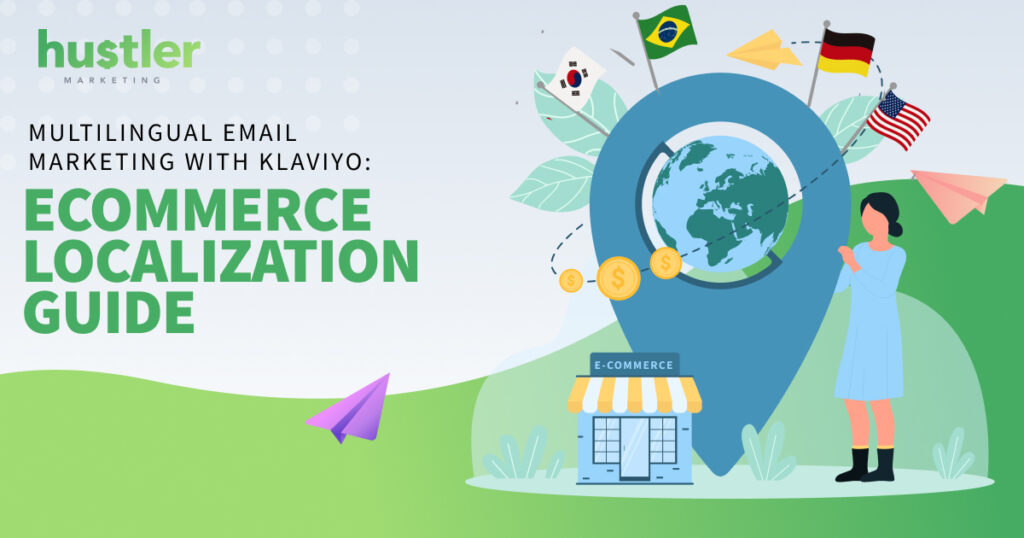
If you want to sell to people, you need to speak their language. Sometimes, “speaking their language” means adapting your tone to match generational and cultural shifts.
But sometimes, it means literally speaking many languages. Building a multilingual email marketing channel is a smart strategic move for any brand whose customer base includes multiple countries or language zones.
If you’re only sending emails in one language, you’re probably losing out on email revenue that’s going to competitors who are doing more to localize their email marketing content.
Sure, But My Email Service Provider Doesn’t Have a Function for This
We know. And we’re here to help.
Unlike most of the content written about multilingual email marketing, this article is 0% fluff. We won’t bore you with the usual preamble about why email marketing works. Because if you’re reading this, you already know all of that.
But we will be spilling the tea on some vital topics that our email account managers have mastered through years of trial and error helping multinational 6-figure eCommerce brands expand their footprint:
- Issues with Email Service Providers when it comes to multilingual email marketing
- 2 solutions, with technical guidance and pros & cons
- Talent management strategies for building a strong translator network
Email Service Providers (ESPs) Aren’t Great for Multilingual Email Marketing
Imagine you’re the manager of a large supplements brand. Your main target is Germany, but you’re getting traffic and interest from Hungary and the United Kingdom.
But you set your Shopify store up for Euros. Now you need to manage sales in 3 territories, and 3 different currencies.

Accurate attribution and reporting of email revenue was tricky enough – now it’s 3 times harder (and we haven’t even begun to talk about email translation).
3 Countries, 3 Online Stores. Sorted?
The obvious quick fix is to set up a new store in each country. That solves one problem, but creates new ones.
Firstly, you can only integrate your ESP (let’s say Klaviyo) with one online store. Some ESPs offer multi-store integration, but Klaviyo doesn’t:

Switch From Klavyio to a New Email Service Provider? Hold Your Horses…
There’s a reason everyone loves Klaviyo. It’s the reigning category leader in key areas like email design & functionality. It’s also hard to beat when it comes to using user behavior data to segment effectively and provide deeper personalization. And after all, the purpose of multilingual email marketing is ultimately to make emails feel – and be – more relevant and personal for each recipient.
So let’s imagine that in the scenario we outlined above, the brand is using Klaviyo and doesn’t want to change.
What can they do to balance that with their multilingual, multinational expansion plans?
How to Use Klaviyo for Multilingual Email Marketing & eCommerce Localization
Luckily, we’ve squared this circle for some of our large multinational clients. Here are 2 ways of doing it, each with its own strengths and weaknesses.
Solution A: Separate Klaviyo Accounts for Each Country
With one of our clients, we have successfully set up a unique Shopify store for each country. Each of these accounts has its own Klaviyo account, like this:

Benefits
With this approach, you don’t need to worry about integrations, because each country manages its own online store and Klaviyo account.
You also no longer have issues with currencies. And it’s relatively easy to track results for each country to understand how each individual store is performing.
Challenge
But there are drawbacks:
- Logging in and out of different country accounts to schedule campaigns.
- Difficulty in reporting due to the need to manually aggregate data from multiple accounts.
So it works, but you sometimes need to work harder to get the big picture.
Solution B: Keeping Everything Under 1 Klaviyo Account (Requires Code)
The other is more complex, and takes some custom development. We’ve built this for another multinational store that ships all around Europe.
They have everything under one Klaviyo account, using a custom integration that brings all their data together through an API. You can also use an ESP’s tagging system to separate results from different countries once you have everything under one account.

This one also works, but it’s not so easy to get up and running.
Benefits:
- Easier management with a single Klaviyo account.
- Cost-effective to maintain one big Klaviyo plan.
Challenges:
- Complexity in setting up custom development.
- Difficult to get country-by-country data.
To pick the right option for your multilingual email marketing, you need to think through a couple of complex issues. For example, if you go with Solution A, you will need at least one person to work full-time on aggregating and making sense of data in multiple siloes. For Solution B, you will need in-house software development expertise to get the custom build right.
Before we get to the issue of email translation…
We’d love to tell you which one is right for your brand. But we can’t. Because we don’t know you yet.
Get yourself a free consultation and we’ll figure it out with you.
But What About Email Translation?
Once you have a setup that can handle multilingual email marketing, you’ll need people who can adapt your content into a new language.
And we say adapt because simple, word-for-word translation is not the way to do this.

You actually need an approach to translation that takes style, tone, and cultural context seriously – in other words, transcreation.
What is Transcreation? Is That Really a Word?
Basically, it’s translation + creation – a way of translating a piece of copy from one language into the other, but changing it so that it resonates emotionally with the reader in the new language. Without this, you can end up with bland or incoherent email translations that sound very “second language” – which is terrible for engagement.
The problem is that effective email translation (or transcreation) requires mastery of both languages, and mastery of the craft of copywriting. But in reality, most translators aren’t actually copywriters. So how do you find translators who fit the bill?
Email Translation 101: Finding the Right Translators to Work on Your Emails
Through years of trial and error, we’ve learned some effective strategies for sourcing translators for our multilingual email clients.
Here are our favorite places to find talent, and best practices for vetting them.
Where: Upwork & LinkedIn
We think Upwork is the best platform for sourcing translators. Here’s why:
- You can easily see reviews and ratings on each profile, so it’s easy to predict whether you’ll be a match.
- You can headhunt, so you don’t need to wait for talent to apply. This is crucial when you need to scale up in a hurry.
- The platform is HUGE. Over 18 million freelancers use Upwork to connect with businesses, so you have a large talent pool to work with.
TIP: add “copywriting” as a keyword in your search, so that you get translators with copywriting experience.
LinkedIn is also a good place to find talent, but you’ll need to add assessments as a filter. You can ask one of your in-house translators to read these assessments and rate them according to how well they have transmitted the message.
Quality Assurance in Multilingual Email Marketing
As an email marketing agency, we have had to make a choice between direct sourcing and working with a translation agency.
We chose direct sourcing early on, because it’s much more cost-effective (up to 10x). That leaves us with enough budget to do proper QA for our multilingual clients.
We have built strong relationships with a network of experienced translators who understand both their target language, and the art of email copywriting. We draw on that network to service large eCommerce stores with a global footprint that covers 15 languages (and counting).
If you’re looking to optimize your setup for multilingual email marketing and effective eCommerce localization, we’re here to help. Contact our team to learn more about our process and how it’s powering ambitious brands on a mission to connect with audiences around the globe.